
Material Science
Material Science
Engineering next-to-skin microclimates across contact cooling, heat transfer, moisture movement, and application-specific fabric structures.

How advanced material research connects to verifiable performance standards and authorized brand use.
Engineering next-to-skin microclimates across contact cooling, heat transfer, moisture movement, and application-specific fabric structures.
Transforming sensory comfort into verifiable physical parameters through long-term performance validation, material assessment, and configuration mapping.

A traceable authorization network for approved materials, tested configurations, partner claims, and consumer-facing Arc-Chill marks.
Material Architecture
Arc-Chill combines mineral-integrated fibers, engineered yarn structures, and surface-layer configurations to create application-specific material systems for different next-to-skin environments.
Mineral structures can be integrated within the polymer system to support heat transfer through the fiber. This pathway is evaluated for close-to-skin products that prioritize intrinsic contact-cooling performance.
Engineered for high-frequency contact interfaces where thermal dissipation must be an inherent property of the substrate itself.

Sculpting channeled fiber geometries and complex knit topologies to guide air and moisture vectoring. Through precise density mapping, we re-engineer the fabric to accelerate vapor release and microclimate equilibrium.
Engineered for multi-layer composite structures where each functional layer from the cooling surface to the protective barrier works in perfect alignment.

Blending advanced surface coatings, functional membranes, and next-to-skin contact layers to deliver targeted cooling with lasting freshness and fabric integrity.
Engineered for multi-layer composite structures where each functional layer from the cooling surface to the protective barrier works in perfect alignment.
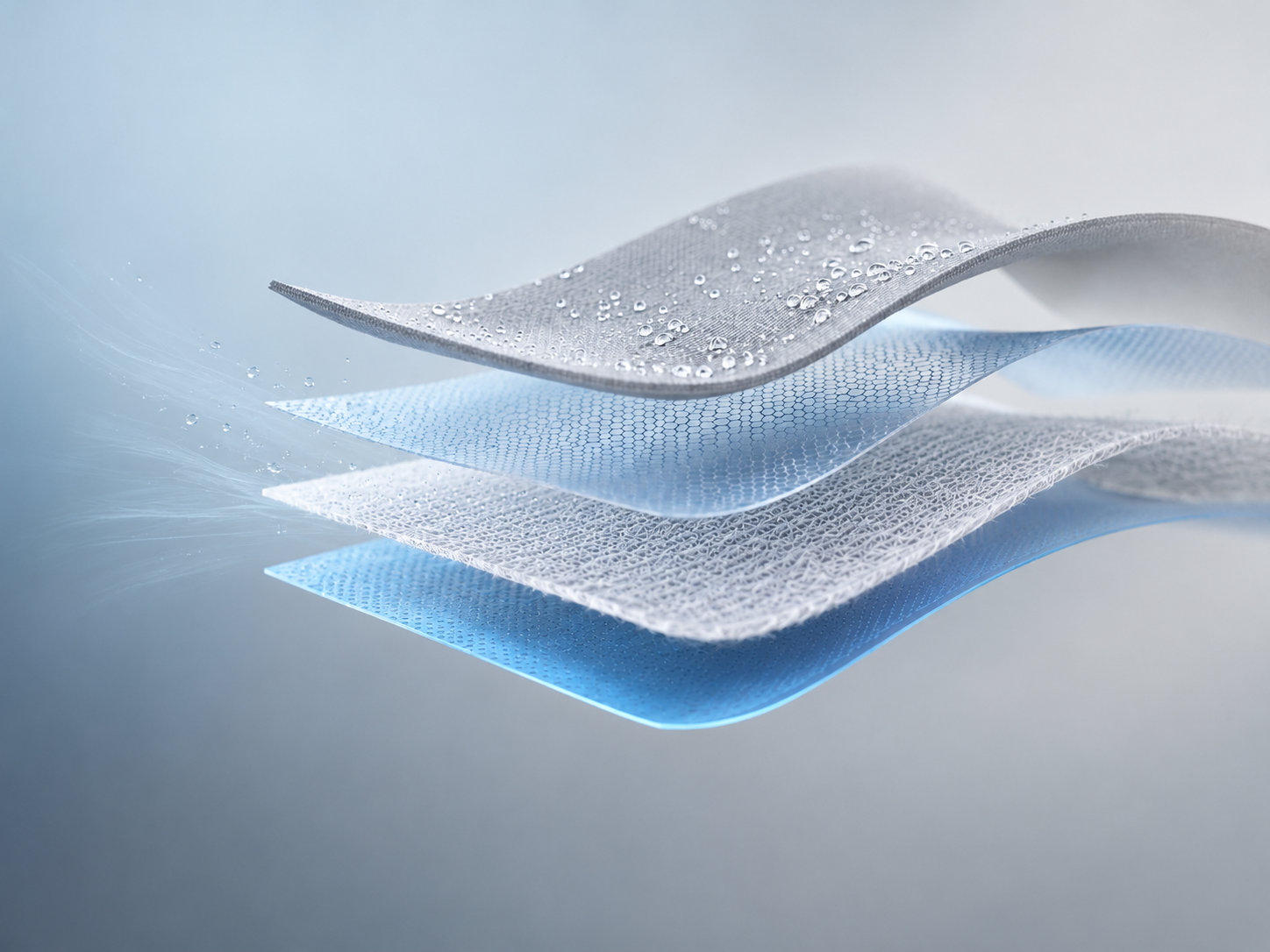
Arc-Chill configurations coordinate four material functions: contact heat transfer, heat movement through the textile, moisture transport, and skin-surface microclimate balance.
TECHNICAL BREAKDOWN OF THE FOUR-STAGE INTEGRATED THERMAL DISSIPATION SEQUENCE.
At first touch, Arc-Chill helps create a cooler contact sensation by supporting heat movement away from the skin.
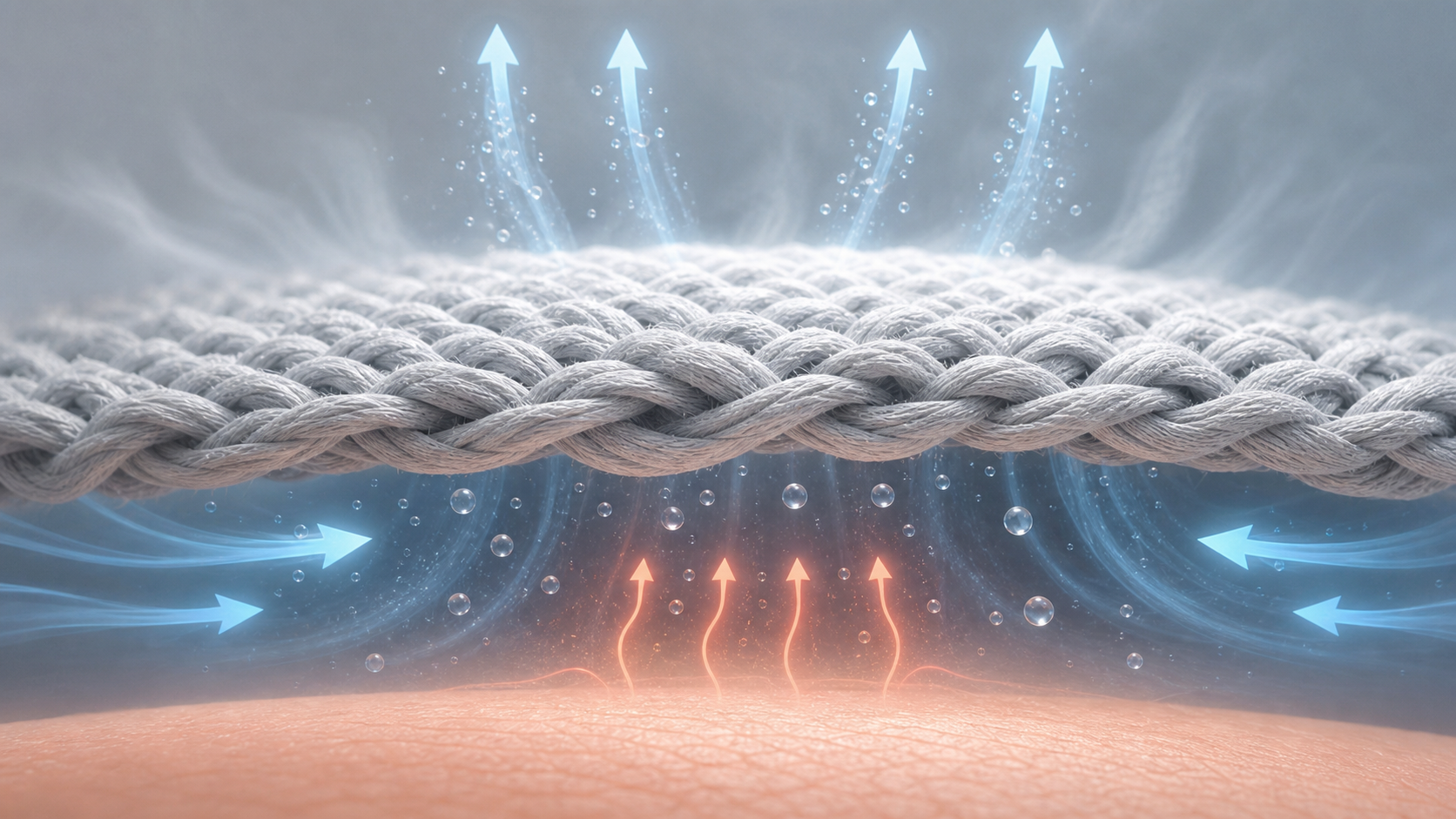
Mineral-integrated fibers and yarn structures help move heat from the contact surface into the textile matrix.
Selected fiber channels and fabric structures can move moisture toward the outer surface, supporting evaporation under suitable conditions.
Dedicated airflow channels finalize the heat release, returning the microclimate between your skin and the fabric to a lasting, refreshed equilibrium.
ARC-CHILL PERFORMANCE FRAMEWORK
Arc-Chill defines cooling comfort through measurable performance dimensions, enabling ACT configurations to be evaluated across materials, structures, and application scenarios. Applicable dimensions vary by material, structure, and use case.